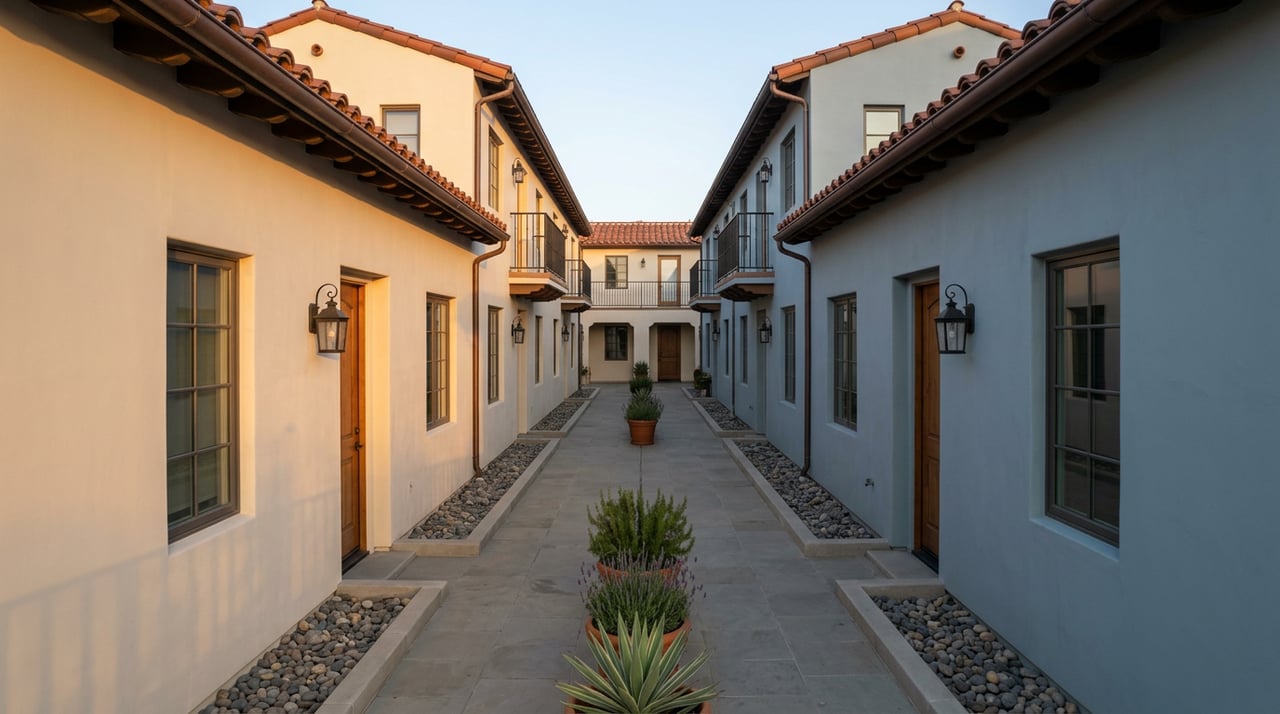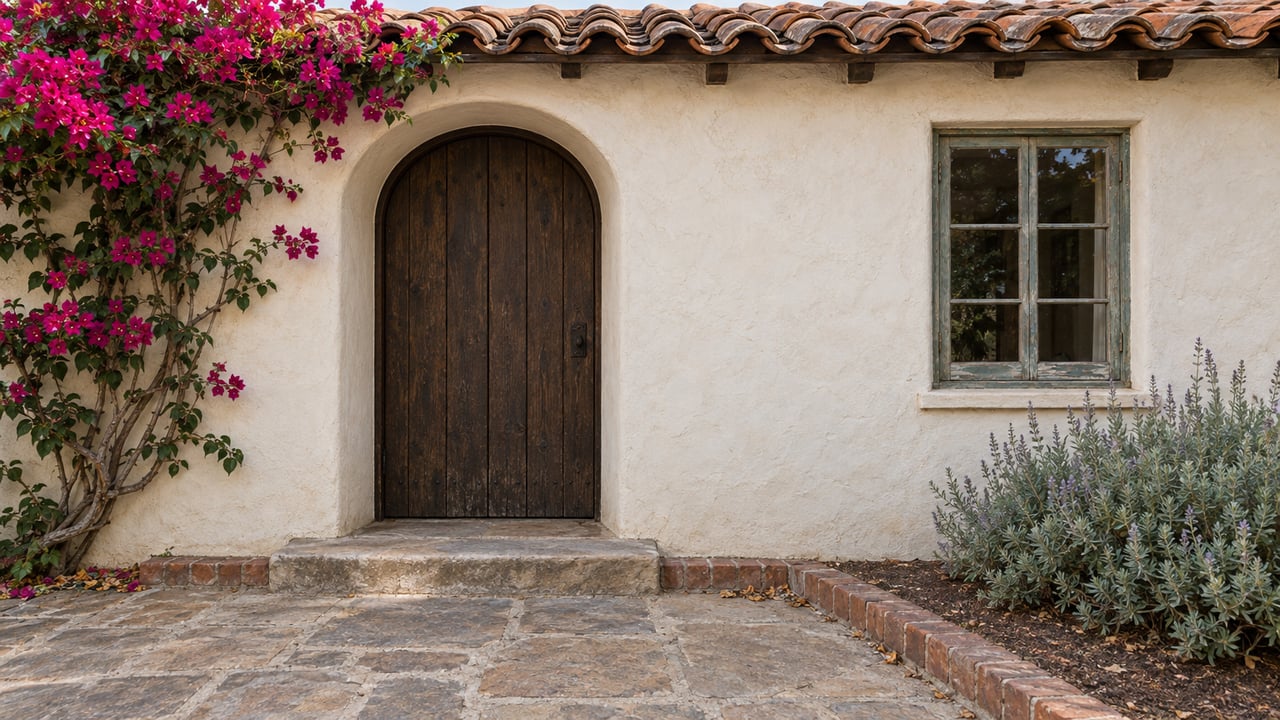
Walk two blocks on Los Rios Street and you can stand in front of two cottages built within a decade of each other, same board-and-batten siding, same shaded yard, same walk to the train depot. One owner pays a property tax bill that looks like it belongs to a different decade. The other pays what you'd expect for a house at this price in this city. The difference isn't the house. It's a contract recorded at the county, and it comes with conditions the low tax bill doesn't advertise.
That contract is the Mills Act, and in San Juan Capistrano's historic core it changes the math on a purchase more than any renovation budget or interest rate will. Here's what it actually does, and what it asks for in return.
The Discount Only Applies If You're Already on the List
A Mills Act contract isn't something you apply for at closing the way you'd shop title insurance. The property has to already sit on San Juan Capistrano's Inventory of Historic and Cultural Landmarks, and even then, the tax relief only exists once a contract has been approved by the City Council and recorded with Orange County. Landmark status makes a property eligible. It doesn't automatically produce a lower bill.
Once that contract is in place, San Juan Capistrano's own historic preservation page cites County Tax Assessor guidance putting the typical reduction between 15 and 60 percent of the assessed value. A separate county assessor's office describing the same state law, the one enabling statute behind every Mills Act contract in California, puts the statewide range closer to 20 to 70 percent, depending on the property's age, condition, and how its market value compares to what a landlord could charge in rent for it. The two ranges don't match because they're not measuring the same pool of properties. What they agree on is that the discount is calculated, not flat, and it moves with the specific numbers on that specific parcel. A buyer comparing two Mills Act homes on the same block can't assume the same percentage applies to both.
The Trade You Make for the Discount
The tax relief is one of four things a landmark designation unlocks in San Juan Capistrano. The other three explain why the discount isn't free.
| What designation unlocks | What it means for an owner |
|---|---|
| Mills Act Tax Relief | Lower assessed value, calculated per contract, recorded with the county |
| Site Plan Review (SPR) | Required city permit before any alteration, addition, relocation, or demolition of the landmark |
| Historic Building Fee Waiver | Some inspection and permit fees may be waived for preservation work |
| State Historical Building Code | Alternate, often less costly paths to satisfy code during rehabilitation |
The Site Plan Review requirement is the one buyers tend to discover after the fact. Want to add a bedroom, move a structure on the lot, or take down a wall that isn't original but sits inside the designated footprint? That goes through the city's SPR process before a contractor breaks ground. The Historical Building Code can make the eventual work cheaper once approved. It doesn't remove the approval step itself. A buyer who plans to renovate first and ask questions later is planning around the wrong sequence in this district.
Why the Comps Don't Travel Across the Tracks
Los Rios Street sits across the railroad tracks from the Capistrano Depot and is generally described as the oldest continuously occupied residential street in California. Roughly forty homes remain there, three of them original adobes, the Montanez, the Rios, and the Silvas, all still standing from the years the mission's builders and ranch workers first put down roots outside the mission walls. Sources differ on the exact year the district earned its spot on the National Register of Historic Places, one account puts it at 1976, another at 1983, but both agree it's been listed for decades, and the National Register's own nomination materials describe the street's small cottages as holding a unity of lot size and setback that contrasts with the newer construction surrounding it.
That unity is exactly what makes appraising these homes harder than pulling three recent sales and adjusting for square footage. A local appraiser working the district has described the tension directly: designation-linked restrictions on what you can alter can suppress a home's value relative to an unrestricted lot nearby, even as the scarcity and character of an adobe or a century-old cottage add a premium in the other direction. A credible valuation has to weigh both instead of assuming the story only runs one way. With so few comparable sales inside the designated boundary, an appraiser on one of these properties is often working with a thinner set of true comps than a standard tract-home file would ever require, and any assumption about a structure's age or a past addition has to be stated as exactly that, an assumption, because it often can't be fully verified.
This is also why the citywide median sale price, sitting near $1.6 million over the three months ending July 2026, tells a buyer almost nothing about what a Los Rios cottage or a downtown landmark should cost. That figure blends the historic core with gated custom estates, equestrian large-lot parcels, and newer townhome construction elsewhere in the city. A designated landmark under a Mills Act contract needs its own comp set, its own tax history, and its own read on what the Site Plan Review file already shows about the property's condition.
What to Confirm Before You Write an Offer or List
A live example from this fall makes the stakes concrete. A 1929 cottage in the historic district, designed by Acjachemen tribal leader Clarence Lobo, is currently marketed as Mills Act-registered, with the listing framing the tax savings as part of the property's value. That's the right instinct for a seller in this district: the contract is an asset to document, not a line item to bury in disclosures. For a buyer looking at that same listing, or any other landmark property in San Juan Capistrano, a few questions matter more than the asking price:
- Is there an active, recorded Mills Act contract on this specific parcel, or does the property only carry landmark designation without the tax contract attached? They're not the same thing, and only one of them shows up on the tax bill.
- Has the current owner filed for Site Plan Review on any work they've done or plan to do? A pending or denied SPR application changes what you're actually buying.
- What does the seller's current property tax bill show, side by side with a comparable non-designated home nearby? That comparison is the real evidence of what the contract is worth, not a percentage range pulled from a general guide.
- Who prepared any recent appraisal, and did it explicitly account for the thin comp set inside the district boundary?
None of these questions show up on a standard disclosure checklist built for a typical resale. They're specific to owning a piece of the forty or so homes that make up one of the oldest residential streets in the state, or any other individually designated landmark scattered through downtown San Juan Capistrano.
A Few Questions Worth Asking Directly
Does every historic-looking home in San Juan Capistrano carry a Mills Act contract? No. Landmark designation and a Mills Act contract are two separate steps. A property has to be on the city's Inventory of Historic and Cultural Landmarks before it can even apply, and the contract itself still requires City Council approval and county recording.
If I buy a landmark property without a contract, can I apply for one later? The eligibility runs with the designation, not the sale, so a new owner of an already-designated property can pursue a contract through the same city process. The application and approval steps happen independent of the transaction.
Does the tax relief cover commercial buildings too, or only residences? The Mills Act as a state law applies to both historic residential and non-residential structures, which is part of why some of the working shops and restaurants inside districts like this one can carry the same kind of contract as a private home.
Buying or selling a designated landmark in San Juan Capistrano means pricing the tax contract and the renovation restriction as one package, not two separate line items. That's the kind of read that comes from working this specific market, not from a general guide to historic real estate.
If you're weighing a Mills Act property in San Juan Capistrano, on Los Rios Street or anywhere else on the city's landmark inventory, Heidi Dickens Homes can help you price the contract, the restrictions, and the house itself as one decision.